
Disclosure
The HVAC School episode included Refrigeration Technologies sponsor messages. The program and prior product examples are attributed to the company; this article does not evaluate product efficacy.
Refrigeration Technologies has formalized how it works with technician-inventors. Before pitching your truck-made fix, find out whether it saves time across the crew and what it would cost to make.
Disclosure
The HVAC School episode included Refrigeration Technologies sponsor messages. The program and prior product examples are attributed to the company; this article does not evaluate product efficacy.
The same service task takes ten minutes longer than it should. One tech rigs a workaround, the next tech asks for one, and by Friday there’s a sketch on the shop whiteboard. That’s a good reason to pay attention. It’s not yet a reason to order a thousand.
On Nov. 19, Refrigeration Technologies formally announced The Lab, an HVACR product development and licensing program for technicians and other inventors. The company was already talking about the initiative on a Sept. 3 HVAC School episode that featured company representatives and included sponsor messages from the manufacturer. The November announcement formalized two routes: build a product with the manufacturer, or discuss licensing one you already make.
A sketch needs evidence the problem is worth solving. A product already in production needs evidence that people buy it, use it, and come back for more. Both go through the same online intake link, but those are different conversations.
The company uses two prior Viper products to show the difference. It says it developed EZDose with HVAC veteran Robert Kraft and launched it in June. HVAC technician Christopher McConnell already had his Drainado adapter on the market when the company licensed it under a multiyear agreement. The manufacturer says wholesale rollout began in September. The two examples show how the partnerships were structured. They don't tell you how well either product performs or what another inventor would earn.
| Where you are | What the manufacturer describes | What to bring to a first conversation |
|---|---|---|
| Concept or early prototype | Work with Refrigeration Technologies to refine the concept, build initial prototypes and potentially scale manufacturing. | A short description of the job problem, who runs into it, and where your workaround still falls short. |
| Already in production | Explore licensing the product to Refrigeration Technologies, which says it can support manufacturing and wholesale distribution. | An account of who buys it, what comes back and why, any reorder patterns, and how much you make today. |
Pick one task and ask the crew to log when it comes up during ordinary work. Record jobs where it goes smoothly as well as jobs where it gets awkward. If the problem disappears once you stock the right part or train a new hire, you may have fixed it without making anything. If experienced techs keep running into it across different jobs, that's worth a closer look.
Use a controlled, shop-approved setting for any prototype comparison. Start with a low-risk task, such as organizing commonly used kit components. A customer’s equipment is not a test bench. Keep names, addresses and other identifying details out of the log.
| What to score | What to write down | What would make you reconsider |
|---|---|---|
| Frequency | Eligible jobs versus all jobs observed; which techs saw the issue. | It only happened on one setup or to one person. |
| Time | Time for the same defined task with the normal setup and the prototype. Count setup and cleanup in both. | The apparent gain disappears when you include setup or reset. |
| Fit and failure | Which setups fit, which do not, and when a tech reverts to the normal method. | A second tech can't get the same result or the fix adds rework. |
| Cost and upkeep | What it costs to make and replace, how much space it takes, and who keeps it stocked. | The crew spends more time maintaining it than it saves in use. |
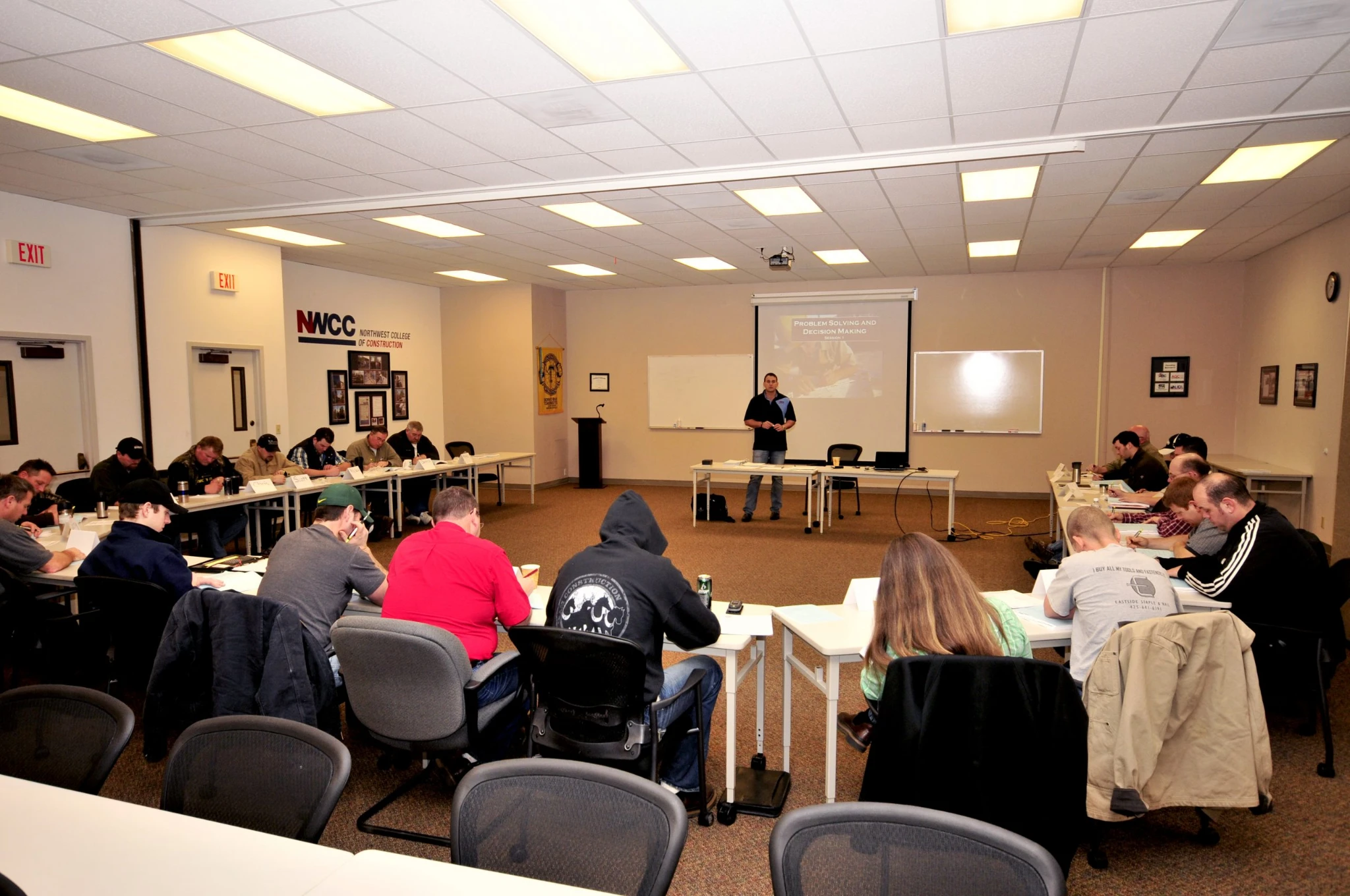
Say four technicians each document six eligible jobs over two weeks. In a shop comparison with the same four techs, a prototype tray for organizing service-kit parts saves five minutes per eligible task, including time to put the kit back together. Across those 24 jobs, the time opportunity is 120 minutes in two weeks, or one crew-hour per week at that workload.
At a hypothetical loaded labor cost of $45 per hour, that hour represents $45 of paid time available for other work. If it helps someone finish the next call on time, that matters. It isn't $45 in cash savings unless paid time actually falls, and it isn't revenue unless someone turns that time into billable work. Five minutes scattered between trucks probably won’t free up an appointment slot. Avoided overtime, fewer trips back to the shop or less time spent hunting parts may be more realistic benefits to track.
Now price the tray at $30 per truck, or $120 for the crew. On paper, $120 divided by $45 is about 2.7 weeks of time value if the five-minute gain holds. That isn't a cash payback calculation, and it leaves out replacements and upkeep. Measure those before assuming a benefit across the whole fleet. If the tray doesn't save time when another tech uses it, drop the calculation and look at what got missed.
Not every improvement needs a life outside your company. A tray sized for the bags your crew already carries might be a win for you and a poor fit for everyone else. Ask a tech who didn’t design it to use it in the same controlled setup without coaching. If they keep reaching for the old kit, find out why before solving manufacturing. An extra instruction or part that seems trivial on your own bench can be the thing another crew won't put up with.
The program page links to an intake form. Start with a non-confidential description of the job problem. Before sending drawings, formulas, manufacturing files or anything that belongs to the shop or a coworker, clarify who can share it and ask how the recipient handles submissions. Keep a private, dated record of who contributed to the idea.
Development costs: Who pays for prototypes, testing and tooling? If the project stops halfway, who keeps the prototypes and pays any remaining bills?
Changes and responsibility: Who can change the design? Who would handle product support, returns or complaints once it’s on shelves?
Payment: Is the potential deal a one-time payment, a payment per unit sold, or something else? What sales or returns count, and what would you be able to verify?
Exclusivity: If the manufacturer gets an exclusive license, what products, territories and sales channels does it cover? Can you still sell your existing inventory?
Timing and exit: What happens if the launch slips, the product never ships, or production ends? What would give either side a reason to end the arrangement?
Those are questions to bring into a meeting, not terms Refrigeration Technologies has promised. The public page explains the paths, not what any inventor would sign.
Even if you never pitch the idea, the field log gives the shop something useful: evidence that the problem belongs in the product-development pile, or a reason to fix the stocking, training or workflow issue on Monday instead.
Casey-prepared working draft, November 22, 2026. Company announcement and program page support announcement date, two routes and issuer-attributed examples; HVAC School establishes earlier public discussion. Contracting Business disclosed AI assistance and follows issuer facts; it is corroboration of coverage, not product results or deal terms.
Continue reading
 M&A / Private EquityM&A and Private EquityMasTec closes $1.25 billion Murphy deal, adding mechanical service capacityThe deal adds commercial HVAC, plumbing, refrigeration and controls service. For contractors, the question is what happens after the installation crew leaves.TradeVulcan Editorial Desk2 min
 ExplainerOperations & LeadershipIf HVAC demand stays flat in 2027, start with the calls you already paid forAn AHR Expo outlook puts the focus on booking, first-time fixes and maintenance. Here's how a service shop can tell which of those is actually costing it work.TradeVulcan Editorial Desk4 min
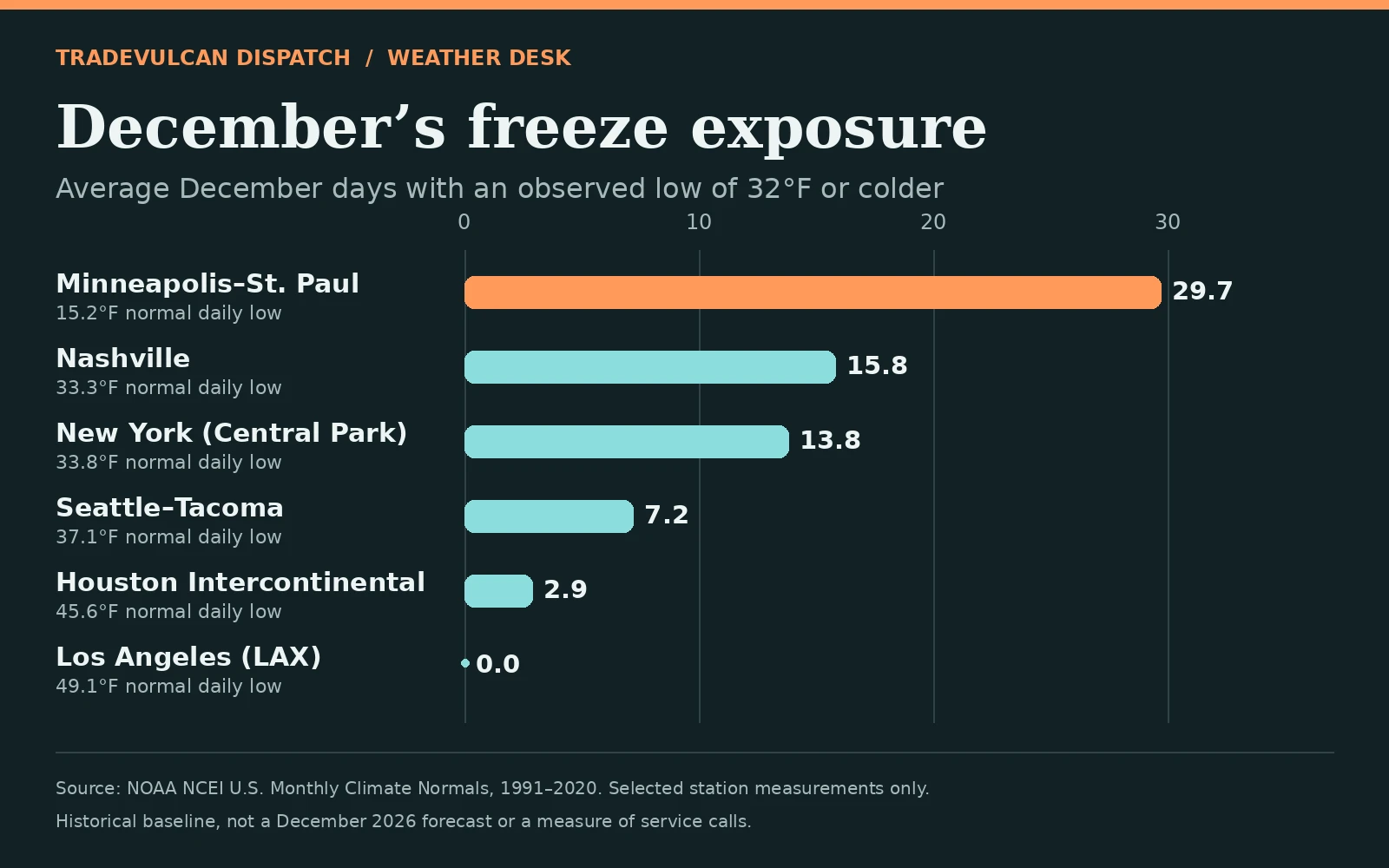 AnalysisBenchmarks, Data & ResearchDecember weather outlook: A mild month can still bring a hard freezeNOAA favors a warmer December across much of the North and a wetter one across much of the South. That could mean fewer routine heating calls in some markets and a tougher schedule for outdoor crews in others.TradeVulcan Editorial Desk6 min